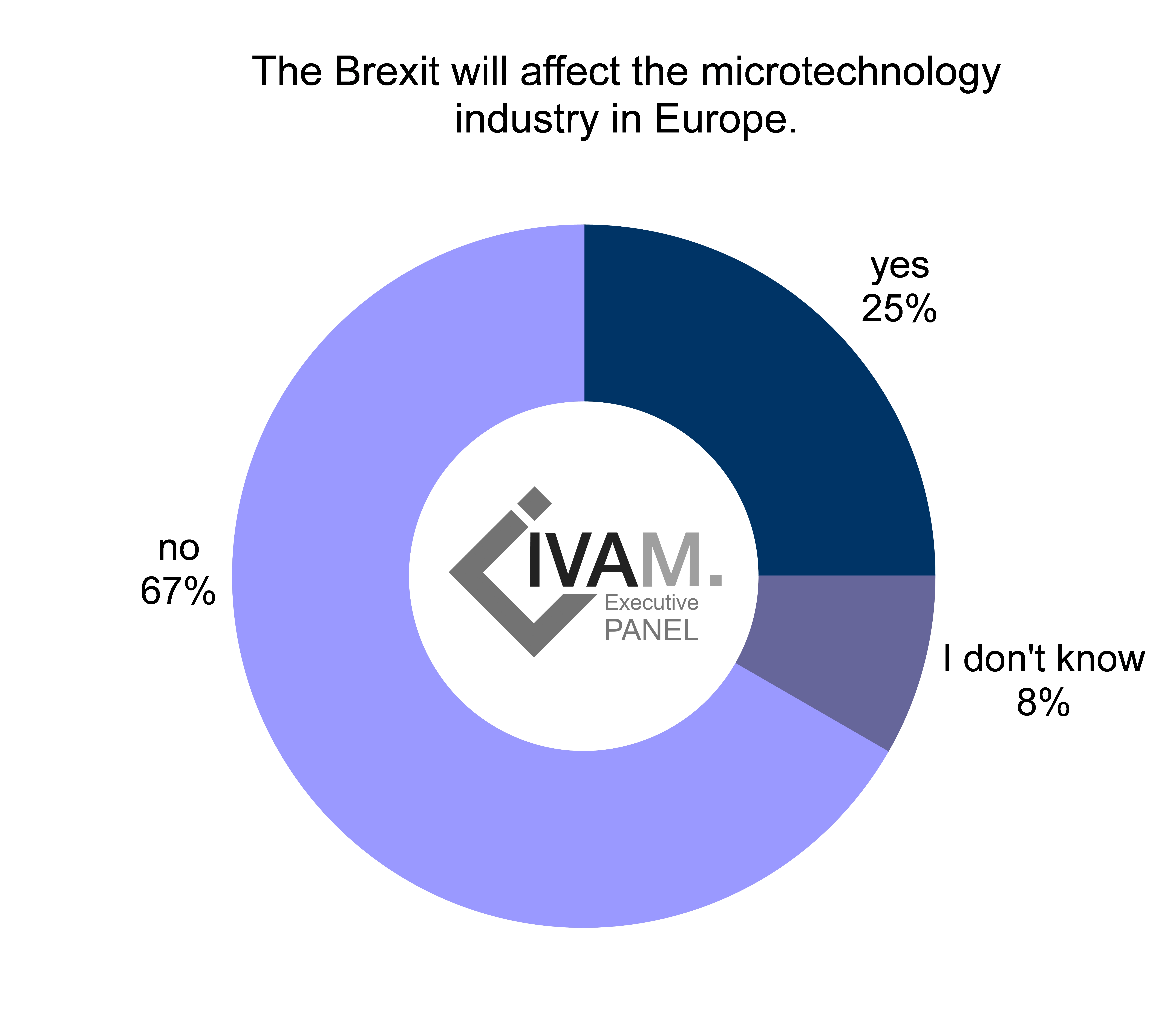
Representatives of the microtechnology industry in Germany do not believe that the Brexit will have a manifest impact on their industry. Two-thirds of the IVAM Executive Panel – a group of selected executives and scientists – who have been queried by the IVAM Microtechnology Network, believe that the Brexit will not affect the microtechnology industry in Europe.
For the German microtechnology industry the United Kingdom is not an important market. Consequently the industry will not face severe drops in exports when trade with the UK becomes more complicated. The other way round, there are few large manufacturing companies in the UK that trade in microtechnology products within the EU, according to the German experts, so that the sales of the British industry are not likely to be severely affected by trade barriers.
However, the Brexit might have a negative impact on innovation and the advancement of microtechnology in Europe. Industry representatives have already warned that participating in joint transnational projects will be difficult for British partners with no claim to EU funding in a survey before the referendum in February. Now that the Brexit has been decided on, an uncertainty prevails about how to utilize the results of current and pending projects with British partners. This uncertainty will also be a hurdle for future cooperation projects.
In addition, there are concerns that resources that are needed for the implementation of structural changes made necessary by the Brexit will no longer be available for innovation projects.
 EU home market requires single economic policy
One of the main arguments EU opponents used in their pro-Brexit campaigns was that EU regulations put too many restrictions on the autonomy of the member states. Participants in the IVAM Executive Panel survey mostly do not think that the European Union should grant its member states more flexibility and self-determination in their economic and financial policy. The majority (58 %) are convinced that a single economic policy, at least within the euro zone, is necessary for the European home market to operate. However, more transparency and a better quality of EU regulations would not be amiss.
Nearly 30 % of the queried microtechnology industry experts would still welcome more flexibility and self-determination to give the member states the chance to develop their own strengths. A lesson learned from Britain’s decision to leave the EU might be that the EU should put less effort into regulating and more into protecting the home market against external influences.




 (1).1.png)